
The First 1-Employee Billion-Dollar Business: AI Made It Real
 Ralf-Stiven Viru, CEO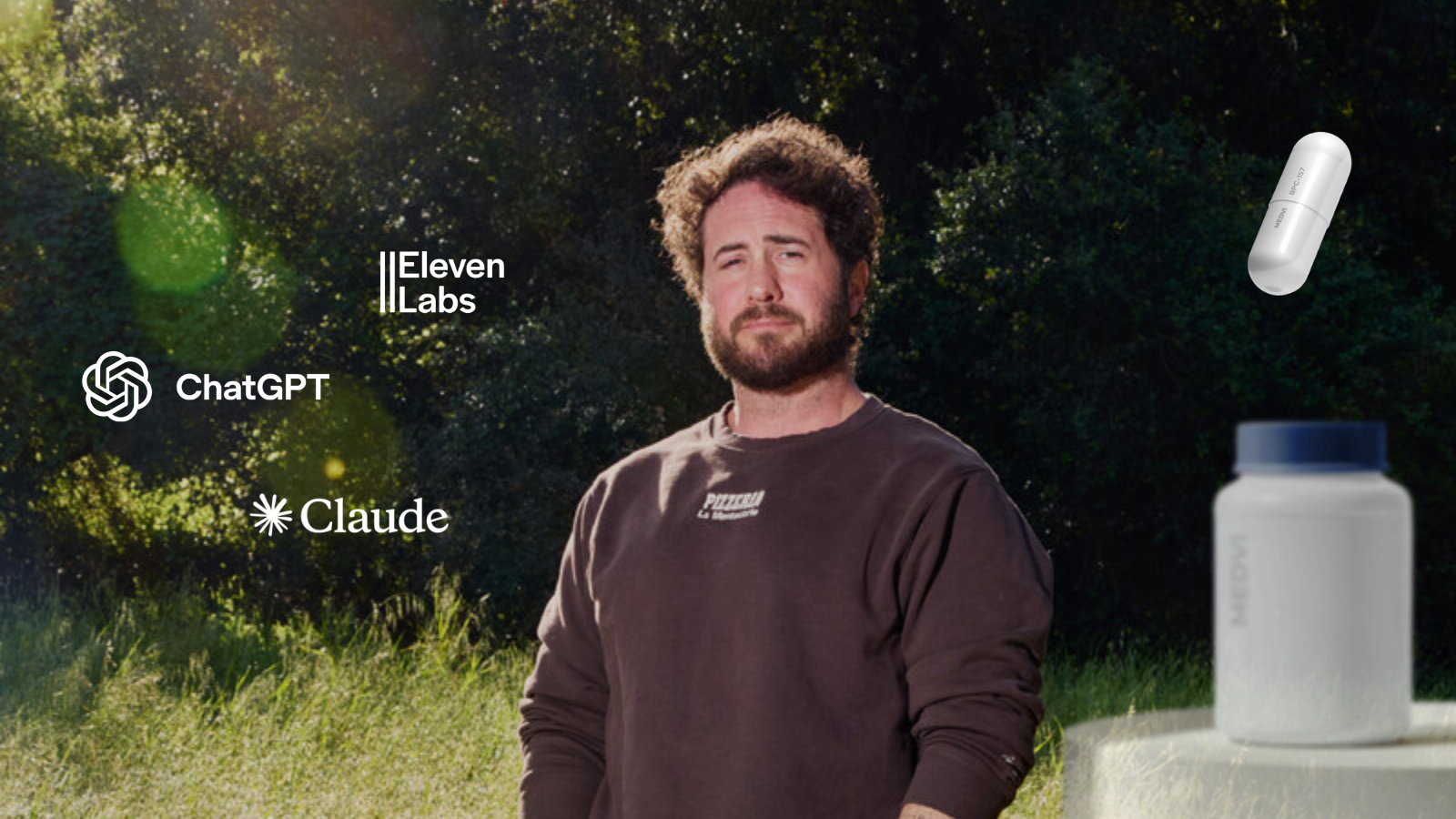
Can one person build a billion-dollar company with AI? Matthew Gallagher did. He created a healthcare company called Medvi from his Los Angeles home. First-year results: $401 million in revenue and $65 million in profit. He started with $20,000 and a few AI tools. He never hired developers or a large team.
Who Is Matthew Gallagher?
Gallagher grew up in modest circumstances and taught himself to code on a laptop his uncle gave him. Before Medvi, he ran a watch subscription club called Watch Gang. It grew to 60 employees but never turned a profit and eventually went bankrupt.
He failed with a large team. Then he built a billion-dollar business almost entirely on his own.
What Does Medvi Do?
Medvi sells weight-loss medications online. These are GLP-1 drugs with the same active ingredients as well-known brands like Wegovy, Ozempic, and Mounjaro. The difference is that they are made by licensed compounding pharmacies at a significantly lower price, starting from $179 per month.
The process is simple: the customer fills out an online questionnaire, a doctor reviews it, writes a prescription, and the medication is delivered to their door.
This is not a classic AI company. It is a healthcare company run with the help of artificial intelligence.
How Does One Person Run This?
Gallagher didn't hire developers or a large team. He built a system where AI and partners do most of the work.
AI handles code, ad creation, customer service, and business analytics. Tools include ChatGPT, Claude, Grok, Midjourney, Runway, and ElevenLabs. Over 5,000 ads run on Facebook at any given time.
Partners handle physician licensing and prescriptions, drug manufacturing, and logistics.
Gallagher focuses on marketing and business management. Everything else is automated or delegated.
The Numbers Speak for Themselves
In its first month, Medvi had 300 customers. By the second month, 1,300. By year-end, 250,000. Today the company serves over half a million patients and earns more than $3 million per day.
For comparison: Hims & Hers earned $2.35 billion in 2025, but with over 2,400 employees and a profit margin of 5.5%. Medvi's margin is 16.2%, and revenue per employee is many times higher.
Hims spent years building its own infrastructure. Gallagher uses partner solutions and pays per transaction.
Altman's Prediction Came True
In 2023, OpenAI CEO Sam Altman said that the first one-person billion-dollar company would emerge soon, made possible by artificial intelligence.
A year and a half later, he commented on Medvi, saying it appeared he had won that bet.
Investor Kobie Fuller added that this is an extreme example, but certainly not the last.
Not Everything Is Perfect
Rapid growth came with problems.
AI-powered customer service sometimes promised prices and products that didn't actually exist. Gallagher had to honor those orders anyway.
The FDA sent a warning letter because the website created the impression that their drugs were approved equivalents of well-known brands, which was not the case.
A security vulnerability was also discovered that exposed patient data. The breach may have affected hundreds of thousands of people.
Ads featured fictional doctors, raising questions about trustworthiness.
The Biggest Risk Is Regulation
Medvi's business model relies on a US law that allows cheaper drug alternatives to be produced during shortages. But the semaglutide shortage was declared over in 2025, and lawmakers are discussing tighter restrictions.
If regulation changes, the entire business model could quickly disappear.
Medvi Is Not an Exception
Medvi is the most extreme example, but not the only one. Small teams are earning sums with AI that previously required hundreds of employees.
- Midjourney earns about $200 million with 11 people
- Cursor reached $100 million with fewer than 20 employees
- Bolt.new grew $20 million in revenue with 15 people in just two months
According to Forbes, AI-powered companies earn an average of $2 to $4 million per employee. In traditional software companies, this figure is about $300,000.
What's Next?
Gallagher continues to expand. In February he launched a men's health line, which brought 50,000 customers in the first month. In March, meal delivery was added. Women's health, hair care, and skincare are also planned.
All investments are made from the company's own profits.
Conclusion
The New York Times described Medvi as "highly efficient and a little lonely."
This is an extreme example, but the direction is clear. AI enables small teams to achieve results that previously required hundreds of people.
This applies everywhere. Not every company needs to aim for a billion, but every company could ask: are we using our people's time as wisely as possible?
If you want to find out where to start, get in touch.