
Open-Source AI Agent Moltbot: What Is It?
 Ralf-Stiven Viru, CEO
What is Moltbot and why is everyone talking about it?

Image source: Lovart
Overview: The open-source AI assistant Moltbot, formerly known as Clawdbot, has rapidly gained popularity thanks to its powerful capabilities. It runs around the clock and is used on platforms like Telegram and WhatsApp. However, experts warn that a system with such extensive access could also pose security risks.
Details:
-
Moltbot runs on the user's own device and can connect to various digital services. For example, it can send messages when tasks are completed.
-
The name was changed after the company Anthropic raised concerns about trademark issues. Project creator Peter Steinberger originally launched the assistant under the name Clawdbot back in December.
-
Viral videos show how Moltbot helps with tasks like buying a car or making restaurant reservations.
-
At the same time, there are warnings that careless use could cause security problems, such as data leaks or injection of malicious commands.
Why it matters: Moltbot demonstrates how far AI agents have come: it can act independently and make decisions on behalf of the user. But since it may have access to messages and various permissions, poor security controls could make such a system dangerous.
OpenAI introduces a free tool for scientific writing
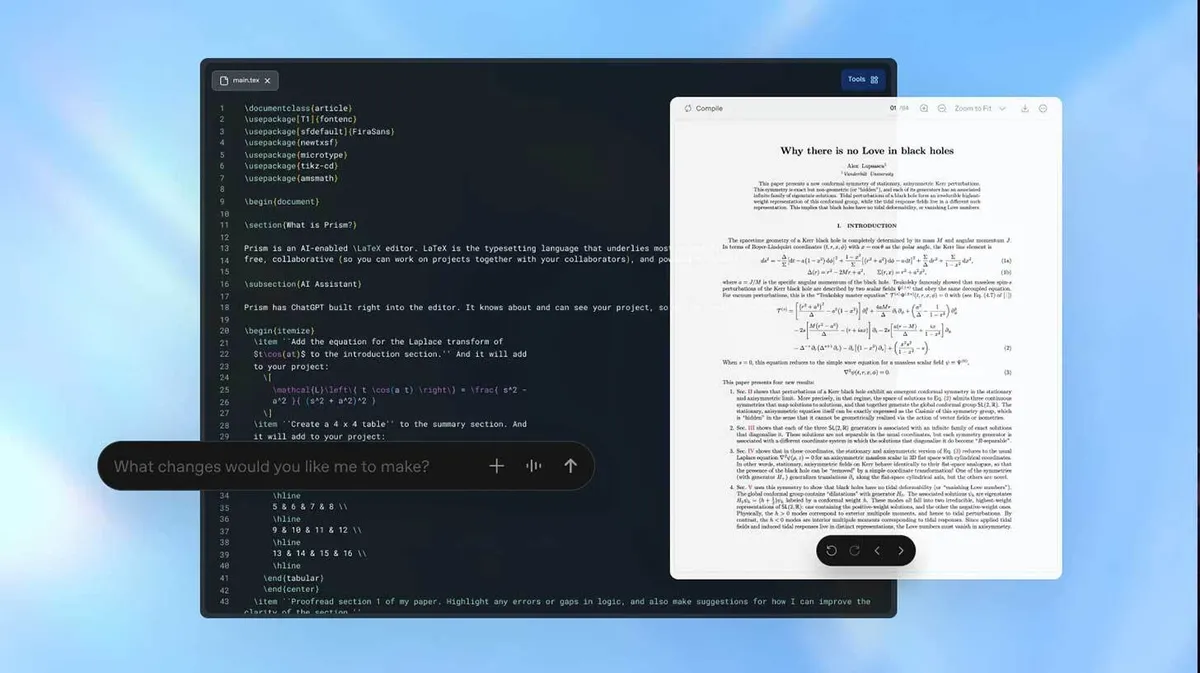
Image source: OpenAI
Overview: OpenAI introduced a new free tool called Prism that helps scientists write and organize research papers. Prism uses OpenAI's best reasoning model and aims to make scientific writing as seamless as AI assistants have already made software development.
Details:
-
Prism was created after OpenAI acquired the scientific writing platform Crixet and integrated its latest GPT-5.2 reasoning model.
-
Scientists can use it to search for research papers, create citations, and convert handwritten notes into proper equations without leaving the document.
-
According to OpenAI, ChatGPT receives over 8 million queries per week on complex scientific topics, showing that scientists are already actively using AI assistance.
-
Prism is free with no limits on team size or number of projects, unlike many expensive academic software solutions.
Why it matters: Since ChatGPT's widespread adoption, many articles containing flawed or even fabricated citations have appeared in scientific journals. OpenAI claims the problem isn't AI use itself, but how scientists apply it without sufficient oversight. Prism should help make AI use in scientific work more reliable.
Moonshot's K2.5 open model competes with top labs
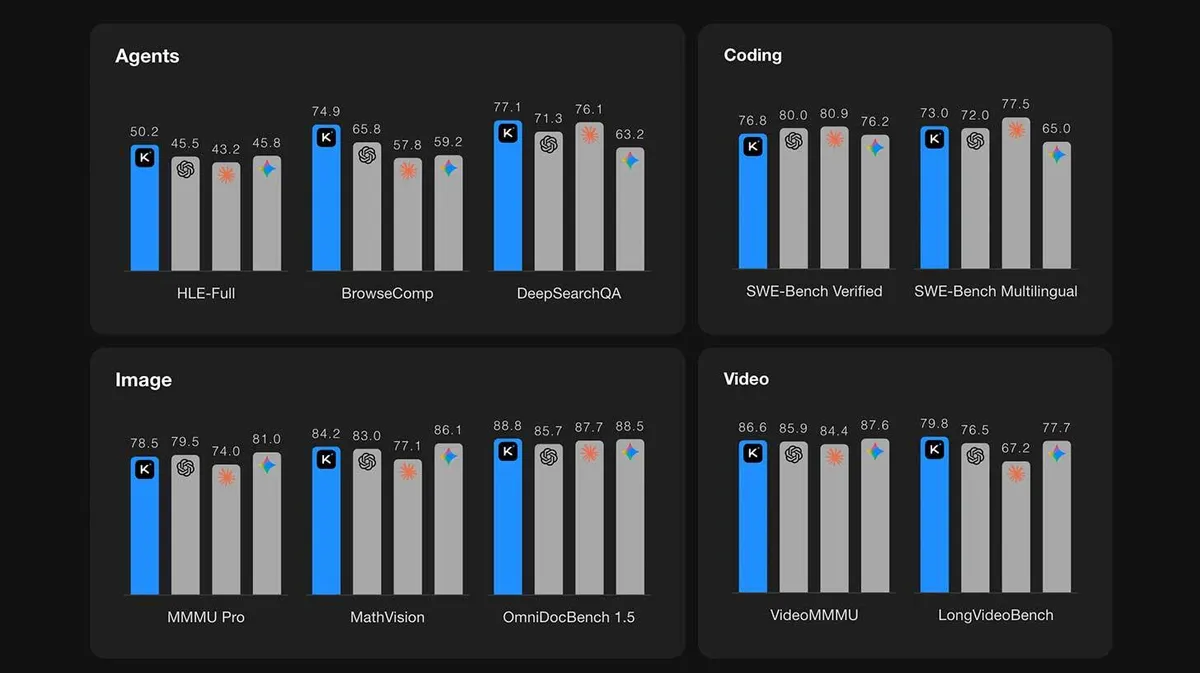
Image source: Moonshot AI
Overview: Chinese AI startup Moonshot introduced its new model Kimi K2.5, which has nearly 1 trillion parameters and competes with top models like GPT-5.2 and Claude Opus 4.5. They also unveiled Kimi Code, a terminal-based AI coding agent.
Details:
-
Kimi K2.5 outperforms GPT-5.2 and Opus 4.5 in some areas, particularly in agent tasks and video-based reasoning.
-
The model is cheaper and more efficient compared to competitors, using a modular approach for solving different tasks.
-
According to Artificial Analysis, it is currently the best open-source model available.
-
Kimi K2.5 includes a system called Agent Swarm, which can manage groups of up to 100 sub-agents capable of working through up to 1,500 steps in sequence.
-
Moonshot also launched Kimi Code, a separate AI agent for developers. It runs in the terminal and in environments like VSCode and Cursor.
Why it matters: The gap between open and closed top models is shrinking. Moonshot's new model shows that Chinese labs are advancing rapidly, while US companies face growing competition. Since Chinese open models are often cheaper, the pressure on the entire AI market is increasing.