
OpenAI's First Mystery Device Has Been Revealed
 Markus Maila, CTO
OpenAI's first AI device may be a smart speaker

Image source: Lovart
Overview: The new device being developed in collaboration between OpenAI and designer Jony Ive may be a smart speaker, priced at approximately $200-$300. The device is planned to include a camera and facial recognition functionality, allowing users to make purchases directly through the speaker. A team of about 200 people is working on the project, with the product expected to be completed by early 2027.
Details:
-
The team was formed after OpenAI acquired Ive's startup Io Products for $6.5 billion. The goal is to leverage former Apple employees for hardware, design, and supply chain management.
-
The camera built into the speaker is designed to monitor the surroundings and encourage users to interact.
-
There are also plans to create AI-powered smart glasses, but their production won't begin until 2028. Additionally, a smart desk lamp prototype is being developed.
-
OpenAI employees have been at odds with the LoveFrom team, as changes have been slow and secretive, while Ive's firm handles design and the hardware team focuses on building devices.
Why it matters: OpenAI has never created physical products before, but Jony Ive's involvement has generated significant consumer excitement. They need to act quickly, as both Apple and Alexa are developing similar products. This speaker is an extremely important first step for OpenAI.
Startup chip makes AI 10 times faster
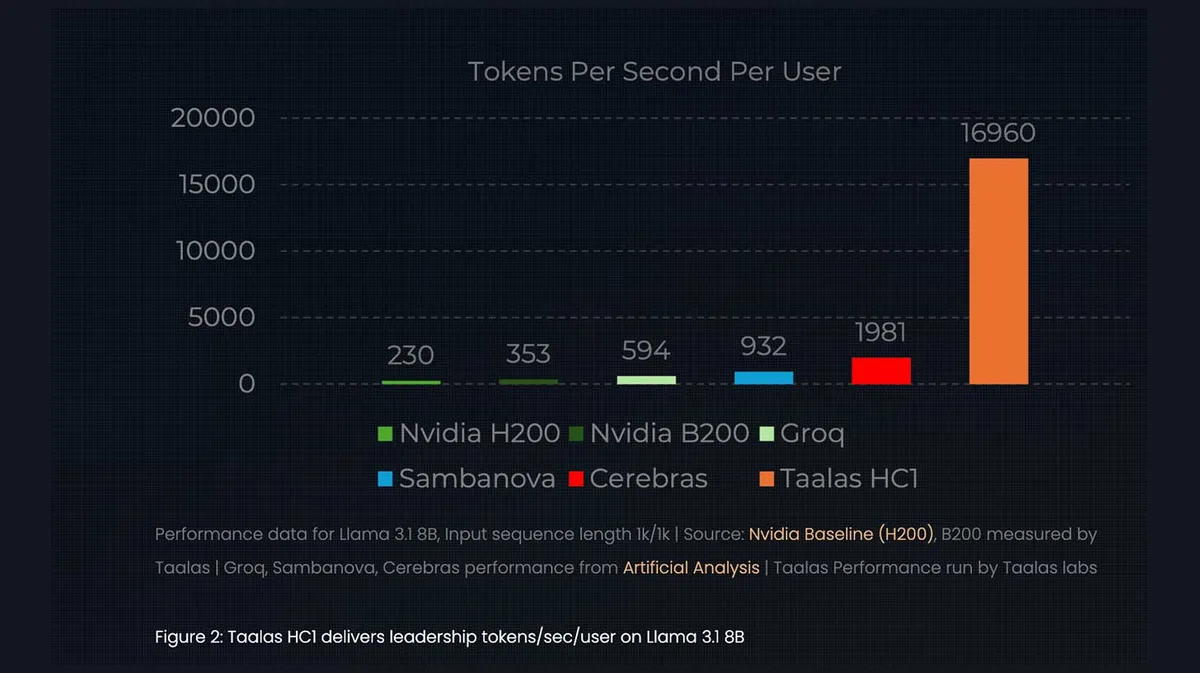
Image source: Taalas
Overview: Startup Taalas introduced the new HC1 chip, which can process AI models extremely fast, nearly 10 times faster than the best existing solutions.
Details:
-
The Taalas HC1 chip is permanently paired with the Meta Llama 3.1 model and doesn't run as software on conventional chips.
-
Thanks to this speed, AI can deliver responses almost instantly, in under 100 milliseconds, while using less energy and costing less than other systems.
-
Although Llama 3.1 isn't the newest model, Taalas can adapt its chips to new models in about a month. More powerful models are planned for this winter.
-
Taalas has recently raised $169 million, bringing the company's total investment above $200 million. They hope to complete a mid-range reasoning model by spring.
Why it matters: Although the initial model isn't the most powerful on the market, the technology is still impressive. If this speed technology is adapted to newer top models, it could revolutionize the development of AI systems and agents, where every millisecond counts.